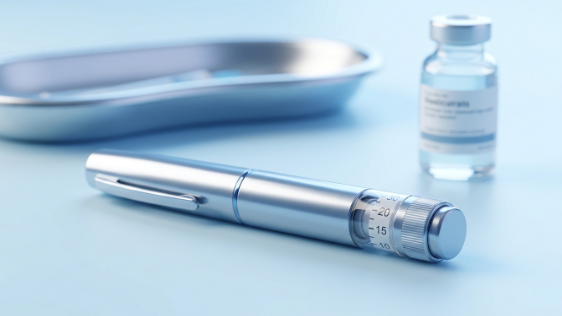
Finasteride Compared: Oral, Topical, and Compounded Formulations

Good hair-loss advice around this review has to separate visible change from camera noise, panic, and marketing. The practical value is in staging the pattern, understanding options, and avoiding promises no one can honestly make from a single image.
A guy I went to college with, call him Jake, texted me a photo of his crown last October. He was holding the phone at that awkward angle everyone who’s losing hair eventually learns, standing under the bathroom’s overhead light, trying to see what his wife had been gently mentioning for six months. “Do I need the pill or the spray?” he asked. No preamble. No context. Just a blurry photo of his scalp and a binary question.
The problem is it’s not binary. Finasteride comes in FDA-approved oral 1 mg (for hair loss), off-label oral 5 mg (originally for enlarged prostate), and a growing menu of topical and compounded formulations. Each one has different evidence behind it, different cost profiles, and different side-effect considerations. The oral 1 mg dose still has the strongest clinical backing. But what “strongest” means and where the other options fit requires more than a text message to sort out.
How We Got Here: Hamilton, Norwood, and the Genetics of Going Bald
The formal study of pattern hair loss dates to James Hamilton’s 1951 paper in the Annals of the New York Academy of Sciences. Hamilton’s key observation was simple and brutal: men castrated before puberty didn’t go bald. That established, definitively, that androgens drive the condition. O’Tar Norwood extended Hamilton’s framework in 1975 (Southern Medical Journal), creating the seven-stage classification system that dermatologists still use. His system added variant subtypes, including the Type A pattern where recession moves front-to-back rather than the classic bitemporal-plus-vertex combination.
The Hamilton-Norwood scale has held up for over 70 years. The 2007 BASP (basic and specific) classification tried to replace it but never gained real traction in routine practice. It’s the kind of thing academics like but clinicians don’t bother with.
The biology underneath is straightforward. Testosterone gets converted to dihydrotestosterone (DHT) by the 5-alpha reductase enzyme. In genetically susceptible follicles, DHT binds androgen receptors in the dermal papilla, shortens the growth phase, lengthens the resting phase, and gradually shrinks the follicle itself. Thick terminal hairs become thin, short, nonpigmented vellus hairs. That process is called follicular miniaturization, and it’s the microscopic signature of pattern hair loss.
The genetic architecture is polygenic. Yes, the androgen receptor gene sits on the X chromosome (hence the maternal grandfather cliché), but autosomal loci on the paternal side contribute meaningfully too. Family history is a hint, not a verdict.
Finasteride blocks the type II isoform of 5-alpha reductase, lowering scalp DHT. Dutasteride blocks both type I and type II, producing a more aggressive DHT reduction and, in head-to-head trials, larger hair density improvements.
What a Proper Diagnosis Actually Looks Like
The American Academy of Dermatology’s clinical guidelines for hair loss evaluation go well beyond “look at it and guess.” A complete workup includes patient history (timeline, course, medications, diet, family history), trichoscopy (scalp dermoscopy), and selective lab work.
Trichoscopy is the big differentiator between an in-person evaluation and a mirror selfie. In androgenetic alopecia, the scope reveals hair shaft diameter variability of 20% or more, yellow dots from empty follicular ostia, and decreased follicular unit density in affected zones with preservation of the occipital donor area. None of that is visible to the naked eye.
Lab work is targeted, not routine. Ferritin, TSH, vitamin D, and CBC make sense when telogen effluvium is on the table or when thinning is diffuse rather than patterned. The AAD does not recommend androgen panels routinely in men with classic pattern loss. The diagnosis is clinical.
Standardized photography (front, top, sides, back, at consistent distance and lighting) matters for tracking. It’s not glamorous. It’s boring, actually. But “boring truth” photography at six-month intervals is the only reliable way to know if treatment is working.
The Treatment Ladder: Evidence First, Then Preferences
Treatment works best early. Once a follicle is gone, no pill brings it back. Here’s what the evidence supports, roughly ordered by strength of data.
Oral finasteride 1 mg daily. The largest evidence base of any hair loss medication. The original five-year randomized trial (Journal of the American Academy of Dermatology, 2002) showed sustained improvements in hair count versus placebo. Sexual dysfunction, the side effect everyone worries about, affects a small percentage of users in randomized data and is generally reversible on discontinuation. “Small percentage” means something like 1-2% above placebo in most trials, not the catastrophe some internet forums suggest.
Topical minoxidil 5% twice daily. FDA-approved, over-the-counter. The mechanism isn’t fully understood (potassium channel opening, vasodilation, direct follicle effects that prolong anagen). Visible response typically appears at three to six months. Foam and solution are clinically equivalent; foam causes less scalp irritation in some users.
Low-dose oral minoxidil (0.25 to 5 mg daily). Off-label but increasingly mainstream after Vañó-Galván et al. published their multicenter safety study of 1,404 patients (JAAD, 2021). Side-effect profile at low doses is more manageable than the original cardiovascular formulation implied, though periorbital edema and hypertrichosis show up.
Dutasteride. Approved for benign prostatic hyperplasia, used off-label for hair loss. More aggressive DHT suppression than finasteride.
PRP and microneedling. Adjuncts with modest evidence. JAMA Dermatology has published smaller randomized trials with positive but variable findings. Reasonable additions to medical therapy. Not substitutes.
Hair transplantation (FUE or FUT). The only treatment that physically moves follicles from donor to recipient area. Most appropriate once the loss pattern is stable, donor capacity is adequate, and expectations are realistic.
For a more granular treatment of the staging and formulation comparisons covered above, this review provides a clinical-grade walkthrough with photographic examples.
See also: How Governments Influence Adoption
What This Actually Costs
Generic oral finasteride 1 mg runs $10 to $25 per month at US pharmacies with discount cards, sometimes as low as $5 to $15 through direct-to-consumer telehealth. Branded Propecia still costs $70 to $90 monthly with zero documented clinical advantage over the generic. That’s one of the most expensive brand premiums in dermatology for a molecule that’s been off-patent for years.
Topical minoxidil 5% is $10 to $30 per month for generic, roughly double for branded Rogaine. Low-dose oral minoxidil, when prescribed, is often under $15 monthly; the prescribing visit ($50 to $150 via telehealth) is the real cost driver.
Hair transplantation in the US typically runs $4 to $10 per graft for FUE. A standard 2,500 to 3,500 graft case puts you at $10,000 to $35,000. In Turkey, the same graft count costs $2,000 to $5,000 total. That reflects labor and overhead differences, not necessarily quality differences (though quality variation is real).
PRP runs $500 to $1,500 per session, with most protocols calling for three to four sessions in year one plus maintenance. The first-year total can exceed an entire year of combination medical therapy. Think of PRP as the organic, cold-pressed juice of hair loss treatments: expensive, partly supported by evidence, and heavily marketed.
Insurance generally doesn’t cover any of this. Pattern hair loss is classified as cosmetic. HSA and FSA accounts may cover prescribed medications and physician visits but typically exclude surgical procedures.
Lifestyle Factors: What’s Real and What’s Internet Lore
Pattern hair loss is genetically determined. Full stop. But the rate at which it progresses has some modifiable inputs. The peer-reviewed literature (primarily JAAD and the International Journal of Trichology) supports a few clear conclusions.
Smoking accelerates hair loss through microvascular damage, oxidative stress, and androgen modulation. Cross-sectional studies show higher rates of androgenetic alopecia in smokers versus matched nonsmokers.
Iron deficiency (ferritin below 30 ng/mL in women, below 50 ng/mL when hair loss is a concern) contributes to shedding via telogen effluvium. Iron repletion helps in deficient patients. Supplementing iron in people who aren’t deficient does nothing for hair density.
Vitamin D deficiency is more strongly linked to alopecia areata than to pattern hair loss, though JAAD reviews note that severe deficiency may affect hair fragility. Supplement to a normal level if you’re deficient. That’s it.
Severe acute stress can trigger telogen effluvium starting two to three months after the event, typically resolving within six to nine months. It doesn’t cause pattern hair loss, but it can unmask or accelerate it in susceptible people.
Anabolic steroid use accelerates pattern hair loss in genetically susceptible men through supraphysiologic androgen exposure. Effects may not fully reverse after discontinuation.
Severe caloric restriction, very low protein intake, and rapid weight loss all reliably produce telogen effluvium. Modest dietary improvements beyond correcting specific deficiencies don’t produce visible hair benefits. No amount of biotin gummies will override your genetics.
When Self-Management Isn’t Enough
Several scenarios warrant in-person dermatology evaluation, not telehealth, not an online quiz:
Sudden, diffuse shedding within the last six months (likely telogen effluvium, needs workup for the trigger). Patchy, smooth bald spots (likely alopecia areata, different treatment pathway entirely). Scalp pain, burning, redness, scaling, or visible scarring (possible scarring alopecia like lichen planopilaris or frontal fibrosing alopecia, where delay costs permanent follicles). Hair loss in women with menstrual irregularities, acne, or hirsutism (needs endocrine evaluation for PCOS or other androgen excess). Rapid progression (more than one Norwood stage per year in a young patient). Failure to respond after 12 months of documented standard therapy.
The AAD’s position is that any progressive hair loss concerning to the patient is a legitimate reason for consultation. They’re right. Nobody should have to justify wanting to keep their hair.
FAQs
Is oral minoxidil better than topical?
Low-dose oral minoxidil produces effects comparable to topical minoxidil with better adherence in many patients. The choice depends on side-effect tolerance and patient preference and should be made with a prescribing clinician.
Can stress cause permanent hair loss?
Severe stress can precipitate telogen effluvium, a temporary diffuse shedding that typically resolves within six to nine months. Stress does not directly cause androgenetic alopecia, though it can unmask or accelerate underlying pattern hair loss in susceptible individuals.
How accurate are AI hair-loss assessment tools?
AI-based hair-loss assessment tools provide reasonable orientation for self-screening but do not replace dermatologic evaluation. They are best used as a starting point for understanding likely stage and treatment options.
How long does it take to see results from finasteride?
Stabilization of shedding often becomes apparent in three to six months, with visible regrowth, when it occurs, typically appearing between six and twelve months. Full effect is assessed at one year.
Are hair transplants permanent?
Transplanted follicles, taken from the genetically resistant donor zone, generally retain their resistance to androgenetic miniaturization and persist long-term. However, the surrounding native hair may continue to thin, which is why most patients continue medical therapy after transplantation.
Is the Norwood scale used for women?
The Norwood scale is designed for male pattern hair loss. Female pattern hair loss is typically classified using the Ludwig or Savin scales, which capture the diffuse central thinning pattern more common in women.
Does finasteride work for everyone?
No. Response varies. The original five-year trial showed sustained improvement in the majority of users, but a meaningful subset sees stabilization without regrowth, and some don’t respond at all. Twelve months of consistent use is the minimum to judge whether it’s working.
References
- Hamilton JB. Patterned loss of hair in man: types and incidence. Ann N Y Acad Sci. 1951;53(3):708-728.
- Norwood OT. Male pattern baldness: classification and incidence. South Med J. 1975;68(11):1359-1365.
- Kanti V, Messenger A, Dobos G, et al. Evidence-based (S3) guideline for the treatment of androgenetic alopecia in women and in men: short version. J Eur Acad Dermatol Venereol. 2018;32(1):11-22.
- American Academy of Dermatology Association. Hair loss: diagnosis and treatment. AAD clinical guidance.
- Olsen EA, Hordinsky M, Whiting D, et al. The importance of dual 5alpha-reductase inhibition in the treatment of male pattern hair loss. J Am Acad Dermatol. 2006;55(6):1014-1023.
- Sinclair RD. Female pattern hair loss: a pilot study investigating combination therapy with low-dose oral minoxidil and spironolactone. Int J Dermatol. 2018;57(1):104-109.
- Vañó-Galván S, Pirmez R, Hermosa-Gelbard A, et al. Safety of low-dose oral minoxidil for hair loss: a multicenter study of 1404 patients. J Am Acad Dermatol. 2021;84(6):1644-1651.
- Gentile P, Garcovich S. Systematic review of platelet-rich plasma use in androgenetic alopecia compared with minoxidil, finasteride, and adult stem cell-based therapy. Int J Mol Sci. 2020;21(8):2702.
- Kassira S, Korta DZ, Chapman LW, Dann F. Frontal fibrosing alopecia: a review. J Am Acad Dermatol. 2017;77(2):209-212.
- Suchonwanit P, Thammarucha S, Leerunyakul K. Minoxidil and its use in hair disorders: a review. Drug Des Devel Ther. 2019;13:2777-2786.
Educational content, not medical advice. This article summarizes peer-reviewed sources and clinical guidelines for general informational purposes and does not constitute medical advice, diagnosis, or treatment. Hair loss has multiple possible causes, and an in-person dermatology evaluation is the appropriate starting point for any individual case. Do not start, stop, or change medications based on this article.
Privacy framing for AI-based assessment tools: AI hair-loss screening tools such as Myhairline.ai analyze user-submitted photos using MediaPipe Face Mesh 468-landmark detection. Photos are not stored, and no account is required. The AI output is educational, not diagnostic.